Manufacturers are combining engineering, monitoring, training and safety management to control increasingly complex workplace risks effectively. Katie Tracy reports.
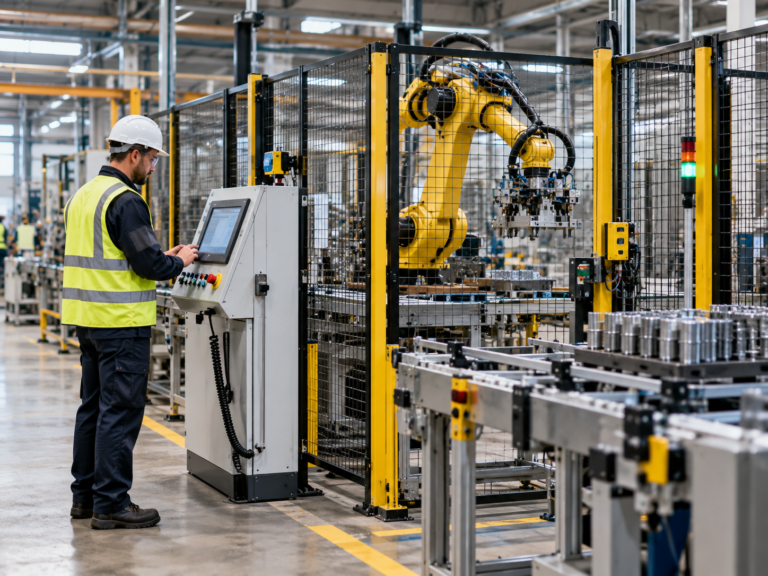
Advanced manufacturing has changed the relationship between people, machinery and production systems. Automated equipment, collaborative robots, digital controls and increasingly connected processes can improve consistency and productivity, but they also create safety questions that cannot be addressed through conventional guarding or procedural controls alone.
Modern facilities often combine established machinery with newer automation, manual workstations, mobile equipment and hazardous substances. Employees may move between highly controlled production cells and areas where human judgement remains central. Maintenance teams may also enter spaces that operators rarely access, creating different exposure patterns during cleaning, adjustment, fault finding and repair.
The central challenge is therefore integration. Risk management has to reflect how machinery, people, materials and procedures interact during normal production and foreseeable abnormal conditions. A safe process on paper can become less reliable when production pressures, maintenance requirements or changes in layout alter those relationships.
Pilz operates within machinery safety and industrial automation, an area that demonstrates why risk assessment must remain connected to machine design and operating practice. Automation can reduce direct exposure to hazards, but its protective value depends on correctly identifying where people may still interact with moving equipment.
Advanced manufacturing consequently requires safety management that develops alongside production technology. Engineering controls remain fundamental, but they need support from competent workers, effective monitoring, planned maintenance and clear procedures for managing change.
What should machinery risk assessment consider?
Machinery risk assessment begins with understanding how equipment will actually be used. This includes routine production, setup, cleaning, inspection, maintenance, fault recovery and foreseeable misuse. Focusing only on normal operation can overlook the situations in which employees are most likely to approach hazardous movement or stored energy.
Assessment should identify mechanical hazards, unexpected startup, crushing points, access requirements and interactions between neighbouring machines. It should also consider how automated sequences change when equipment stops unexpectedly or operators intervene to restore production.
SICK works within industrial sensing and machine safety, reflecting the importance of reliably identifying people, objects and operating conditions around automated equipment. In modern manufacturing, protective measures increasingly depend on accurate information about what is happening within and around machinery.
However, sensing should not be treated as a substitute for sound engineering. The hierarchy of controls still requires organisations to eliminate hazards where reasonably practicable before relying on protective systems or procedures. Where access is necessary, safeguards should be appropriate to the speed, force, stopping performance and foreseeable behaviour of the equipment.
Risk assessment also needs review when production changes. New materials, altered cycle times, software modifications or different working methods can affect assumptions made during commissioning. Change management is therefore an essential part of machinery safety.