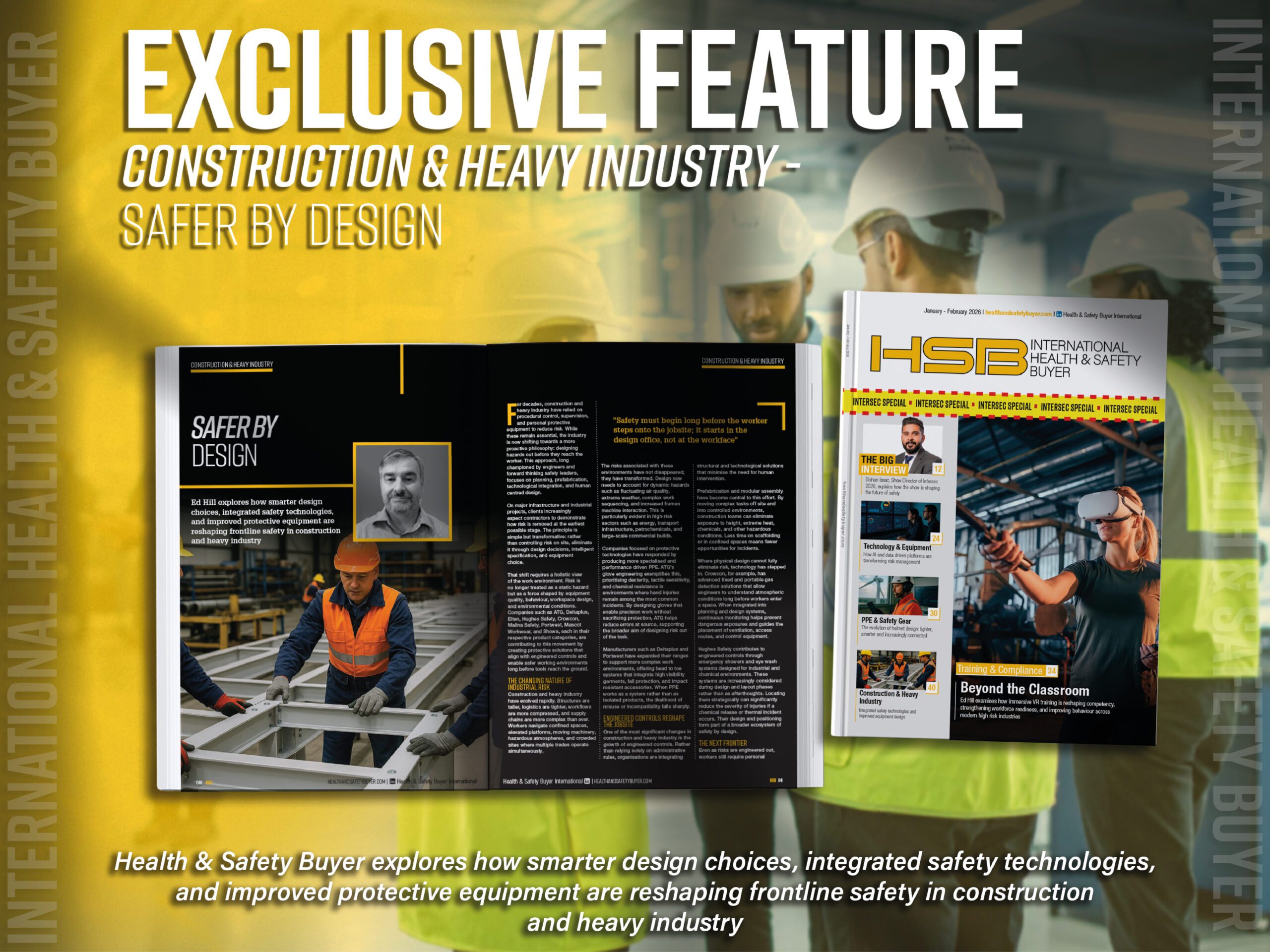

Ed Hill explores how smarter design choices, integrated safety technologies, and improved protective equipment are reshaping frontline safety in construction and heavy industry
For decades, construction and heavy industry have relied on procedural control, supervision, and personal protective equipment to reduce risk. While these remain essential, the industry is now shifting towards a more proactive philosophy: designing hazards out before they reach the worker. This approach, long championed by engineers and forward thinking safety leaders, focuses on planning, prefabrication, technological integration, and human centred design.
On major infrastructure and industrial projects, clients increasingly expect contractors to demonstrate how risk is removed at the earliest possible stage. The principle is simple but transformative: rather than controlling risk on site, eliminate it through design decisions, intelligent specification, and equipment choice.
That shift requires a holistic view of the work environment. Risk is no longer treated as a static hazard but as a force shaped by equipment quality, behaviour, workspace design, and environmental conditions. Companies such as ATG, Deltaplus, Elten, Hughes Safety, Crowcon, Malina Safety, Portwest, Mascot Workwear, and Showa, each in their respective product categories, are contributing to this movement by creating protective solutions that align with engineered controls and enable safer working environments long before tools reach the ground.
The Changing Nature of Industrial Risk
Construction and heavy industry have evolved rapidly. Structures are taller, logistics are tighter, workflows are more compressed, and supply chains are more complex than ever. Workers navigate confined spaces, elevated platforms, moving machinery, hazardous atmospheres, and crowded sites where multiple trades operate simultaneously.
The risks associated with these environments have not disappeared; they have transformed. Design now needs to account for dynamic hazards such as fluctuating air quality, extreme weather, complex work sequencing, and increased human machine interaction. This is particularly evident in high-risk sectors such as energy, transport infrastructure, petrochemicals, and large-scale commercial builds.
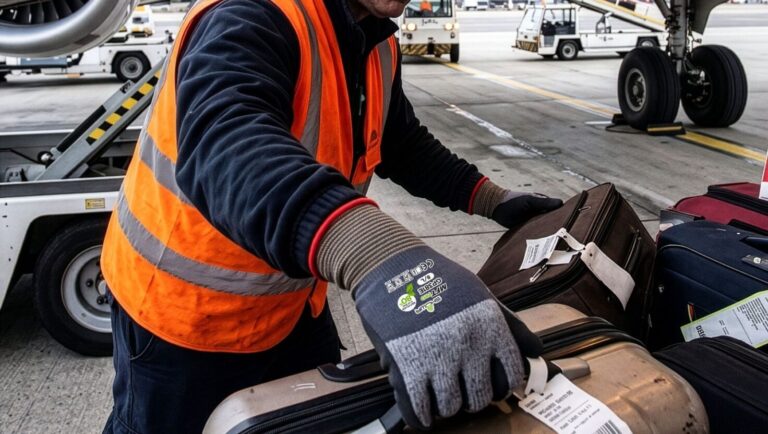
Companies focused on protective technologies have responded by producing more specialised and performance driven PPE. ATG’s glove engineering exemplifies this, prioritising dexterity, tactile sensitivity, and chemical resistance in environments where hand injuries remain among the most common incidents. By designing gloves that enable precision work without sacrificing protection, ATG helps reduce errors at source, supporting the broader aim of designing risk out of the task.
Manufacturers such as Deltaplus and Portwest have expanded their ranges to support more complex work environments, offering head to toe systems that integrate high visibility garments, fall protection, and impact resistant accessories. When PPE works as a system rather than as isolated products, the likelihood of misuse or incompatibility falls sharply.
Engineered Controls Reshape the Jobsite
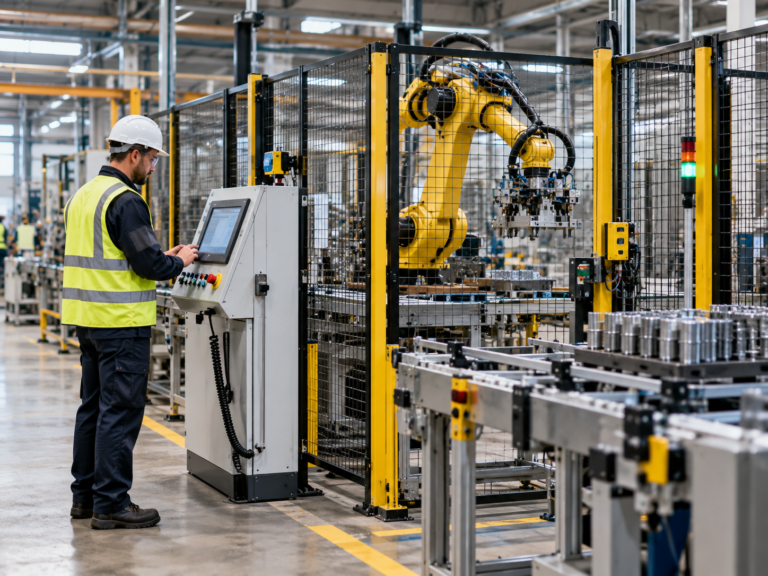
One of the most significant changes in construction and heavy industry is the growth of engineered controls. Rather than relying solely on administrative rules, organisations are integrating structural and technological solutions that minimise the need for human intervention.
Prefabrication and modular assembly have become central to this effort. By moving complex tasks off site and into controlled environments, construction teams can eliminate exposure to height, extreme heat, chemicals, and other hazardous conditions. Less time on scaffolding or in confined spaces means fewer opportunities for incidents.
TO READ THE FULL ARTICLE SEE OUR LATEST ISSUE HERE