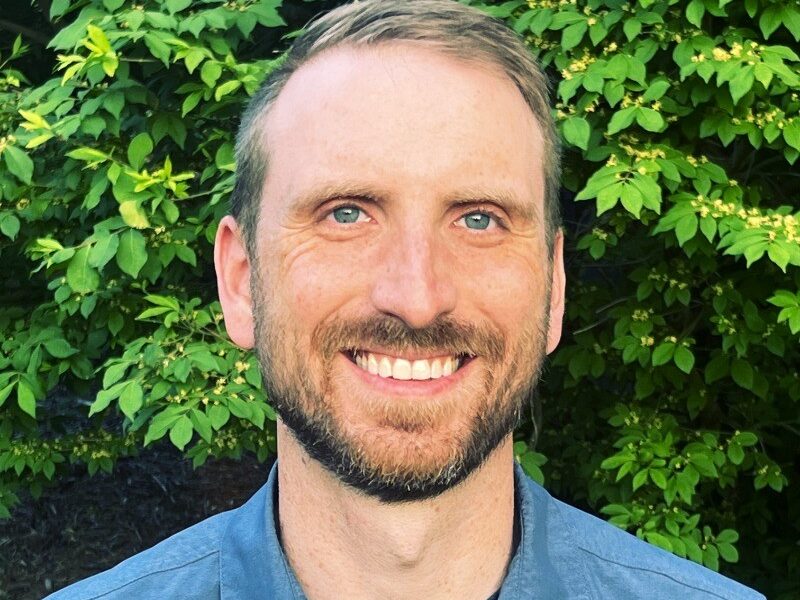

Bryan Javorek, Product Category Manager at Team Wendy discusses helmet innovation, rotational impact research, modular protection systems and the future of operational safety.
Firstly, can you say a little about your background and your history with Team Wendy?
I’ve been with Team Wendy for more than 16 years, working across engineering, research, project management, technical management and product management roles. My academic background is in physics and mechanical engineering, including a master’s degree in mechanical engineering from the University of New Hampshire.
I started at Team Wendy as a project engineer, designing and developing helmet retention systems, padded liner systems and accessories. During that time, I invented the patented CAM FIT™ retention system and REVOLVE™ liner, and I contributed technical expertise that supported Team Wendy’s helmet contract award with the Australian Defence Force.
Today, as Product Category Manager, I manage the lifecycle of Team Wendy’s helmet portfolio, with a focus on non-ballistic helmets and reducing traumatic brain injury through research-led product development, market analysis and voice of customer input.
What experience and understanding of the market do you bring to your role?
I think my perspective is grounded in both engineering and user feedback. In this market, the helmet is not just a piece of PPE; it is a platform. It has to protect against impact, manage fatigue, integrate with lights, communications, eye and face protection, hearing protection and other mission-critical equipment, and it still has to be comfortable enough to wear for long periods.
Please tell us about Team Wendy and how it was established.
Team Wendy was founded in Cleveland, Ohio, in 1997 by Dan T. Moore after the passing of his daughter, Wendy, from a traumatic brain injury following a skiing accident. That origin is very important to who we are. The company began with a focus on improving head protection and reducing the risk of brain injury, and that mission still drives the business today.
Looking at the past 10 years, what would you say have been the latest innovations in protective head gear?
One of the biggest changes has been the move from thinking about helmets as simple shells to thinking about them as complete systems. A modern helmet includes the shell, impact liner, retention system, suspension, accessory interface, communications integration, eye and face protection and the way all of those elements work together.
There has also been much greater focus on rotational and blunt-impact performance. Traditional tests often look at linear impact, but real-world head injuries are more complicated. Falls, slips, vehicle impacts and debris strikes can involve rotational motion, multiple angles and complex body movements. That has pushed the industry to develop better test methods and better liner technologies.
Another major innovation is modularity. Users want to configure a helmet for the mission, whether that means rescue, maritime work, tactical operations, technical rope rescue or disaster response. That has changed the way we design rails, shrouds, covers, lights, visors and communications interfaces to be even more adaptable to different scenarios.
TO READ THE FULL ARTICLE READ THE LATEST ISSUE HERE.