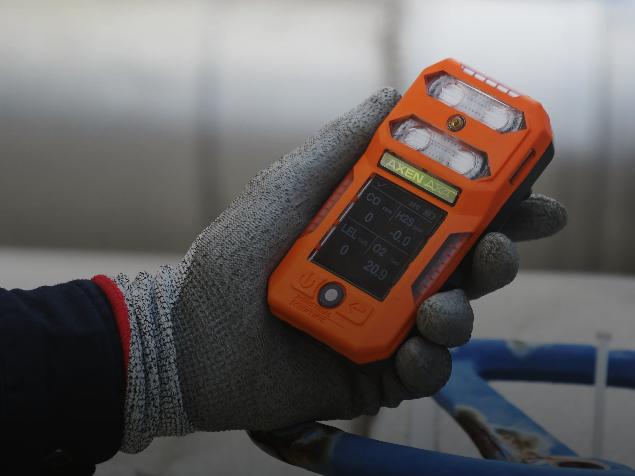

Industrial Scientific has introduced the Axen AX4, a four-gas personal monitor designed for contractors, rental fleets and industrial organisations that require straightforward gas detection without the additional complexity of a highly connected monitoring programme.
Announced on 18 August, the device is intended for routine industrial applications where employees may be exposed to hazardous atmospheres and require portable monitoring throughout a shift. Industrial Scientific has positioned the AX4 particularly for contractor teams, shutdown and turnaround work, rental equipment fleets and other applications where monitors need to be deployed rapidly across multiple workers.
The launch reflects an important consideration in occupational safety procurement: while connected gas detection can provide substantial benefits for complex or high-risk facilities, not every employer requires the same level of connectivity, analytics or fleet management.
Designed for everyday deployment
The AX4 provides four-gas monitoring through a portable device equipped with a bright display and a claimed battery life of up to 24 hours. Industrial Scientific says the unit can reach a full charge in less than two hours, helping organisations return equipment to service quickly between shifts.
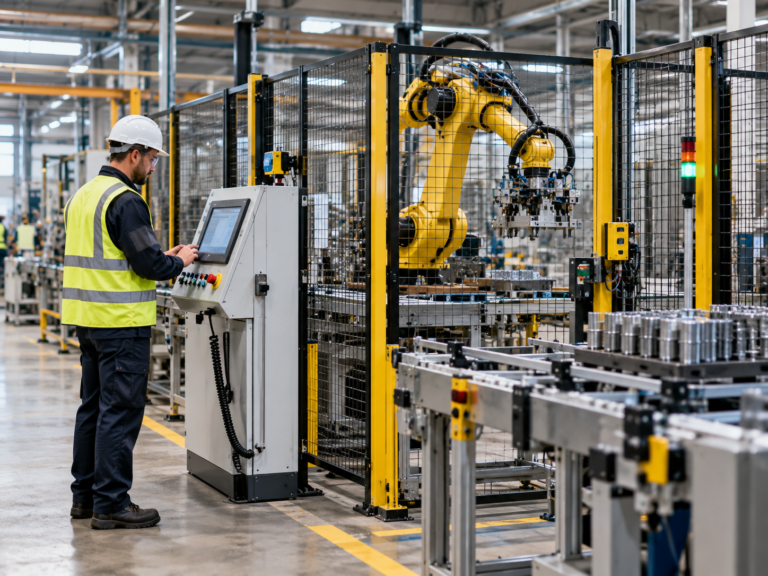
Ease of deployment is particularly relevant where organisations use temporary workers or contractors. Equipment that requires extensive familiarisation can create additional administrative demands, especially during maintenance shutdowns or projects where large numbers of workers arrive on site within a short period.
Industrial Scientific has therefore focused the AX4 around relatively simple operation, with the manufacturer arguing that this can reduce training requirements while still providing personal atmospheric monitoring.
The company is also introducing the Axen AX1, a single-gas monitor intended for applications where workers only require protection against one atmospheric hazard. The AX4 is expected to become available globally, while the AX1 will initially be available in the US and Canada.
Matching technology to risk
The development also highlights a wider issue for health and safety buyers: additional technology is not automatically the same as improved protection.
Connected gas detection platforms can provide location information, remote alarms, exposure records and centralised fleet management, but these functions need to correspond with the actual risks and operational structure of the workplace.
For some industrial sites, that connectivity is essential. For others, particularly contractors, smaller operations and temporary projects, dependable personal monitoring that can be issued and maintained easily may represent the more practical option.
Gas detection procurement should therefore start with the risk assessment rather than the specification sheet. Buyers need to consider which atmospheric hazards are present, how workers move through the facility, how monitors will be maintained and calibrated, and whether supervisors require remote visibility of alarms.
The AX4 represents one side of that increasingly varied market: personal gas detection designed around straightforward deployment rather than maximum connectivity. As manufacturers expand both connected and standalone options, safety teams have greater scope to match monitoring technology more closely to the environments in which workers actually operate.