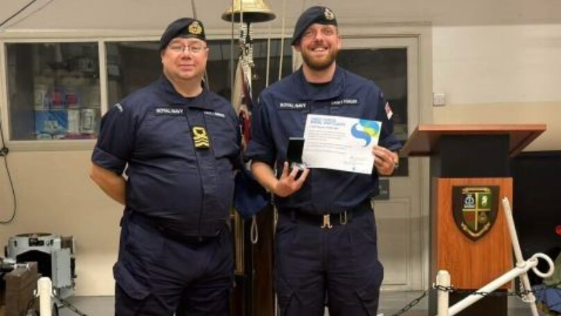

Matthew Sumner-Thorpe, HSEQ Manager at Sodexo UK & Ireland and Cadet Force Adult Volunteer with the Sea Cadets, explains how his experience in the Cadet Forces helped develop the leadership, communication and decision-making skills that have shaped his professional career.
Developing the next generation of safety professionals
The health and safety profession needs to think differently about where its next generation of talent will come from.
Demand for health and safety professionals is increasing, with recruiters reporting growing demand for people who can influence safety culture, lead change and connect health and safety with wider business objectives.
Technical knowledge and qualifications will always matter. But some of the qualities that make a truly effective HSEQ professional – leadership, communication, resilience, judgement and the ability to influence people – are developed through experience as much as formal training.
I know that because many of mine were developed long before I started my career in health and safety.
Leadership skills through the Sea Cadets
I first joined Newton-le-Willows Sea Cadets as a cadet 23 years ago, and I have now spent 19 years as an adult volunteer, including 18 years in uniform, and today serving as the Commanding Officer and Deputy District Officer.
The Cadet Forces have given me opportunities to lead people, manage teams, plan complex activities, communicate with people from different backgrounds and make decisions when circumstances don’t go according to plan.
Those experiences have proved invaluable throughout my career.
Applying leadership to workplace safety
At Salford-based prison HMP Forest Bank, where I worked as the Safety and Risk Manager, I was responsible for supporting a safe environment for around 1,430 prisoners and more than 600 staff. The prison achieved a five-star British Safety Council audit during an exceptionally challenging period, including the Covid-19 pandemic.
That wasn’t achieved through paperwork alone. It required leadership, stakeholder engagement, communication and the ability to bring people with you, qualities I had been developing through the Cadet Forces for years.
During the pandemic, I was part of the Covid Command team, helping adapt safe operating procedures and risk assessments as circumstances changed. I also worked with colleagues, HM Prison and Probation Service and other external stakeholders to ensure the right controls and PPE were in place.
My experience in the cadets had taught me to remain calm under pressure, adapt quickly and, perhaps most importantly, understand that leadership is about people. While you can read about this in a textbook, getting that kind of lived experience at a young age in the cadets and then as a volunteer is invaluable and transferable.
Cadet Forces as a health and safety talent pool
That is why, during National Cadets Week (5-11 October), I’d encourage the health and safety profession to look more closely at the Cadet Forces as a viable talent pool.
There are roughly 138,000 cadets across the UK, and the Government has expressed an interest to increase the number by a further 40,000 by 2035. That’s hundreds of thousands of young people who have developed the soft skills that make up the foundations for the safety leaders of tomorrow.
My own journey from Sea Cadet to health and safety professional isn’t a blueprint for everyone, but it has shown me that some of the most valuable skills in my industry can be developed well before someone ever enters the profession.
If we’re serious about future-proofing our workforce, perhaps we should start looking for that talent in the Cadet Forces.