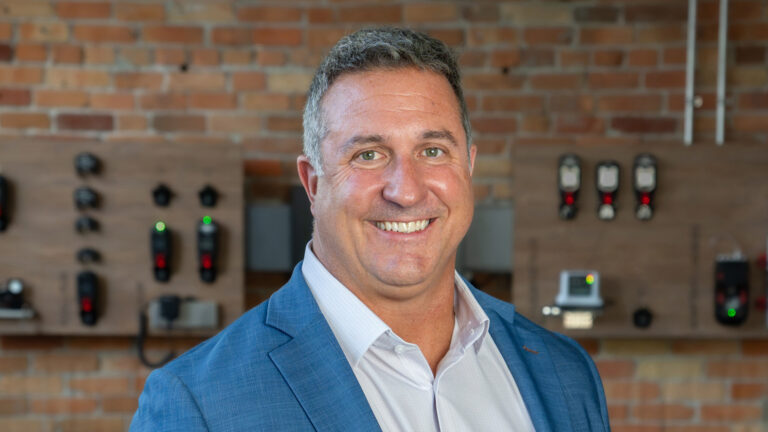
Chris Allcard, Director of Reliance Protect, explores how connected technology is transforming lone worker protection and empowering safer workplaces in our Safety Brief Q+A.
What made you want to work in the safety industry?
The key factor that inspired me to enter this industry in 2004 still excites me today: the opportunity to develop innovative solutions that keep people safe.
In the last 10 years, what advances have you seen in lone worker protection solutions?
Solutions have evolved to become far more than reactive protection tools. They can now deliver quality data that provides organisations with tremendous insights, allowing them to take a proactive approach to lone worker risk management.
Further to this, there has been a massive rise in the degree to which individual solutions can integrate with third-party systems, again allowing access to powerful trending data and insights capable of driving administrative process efficiencies through automation.
We’ve also seen a growing appreciation of the preventative potential of visual body worn cameras. Traditional lone worker solutions were designed to be discreet, enabling users to raise alarms without alerting the aggressor. Body worn cameras turn that principle on its head: by being overt, they can de-escalate dangerous encounters. They also create powerful evidence. These advantages are particularly significant for frontline workers in sectors including retail, public transport and hospitality.
What do you think the future of safety looks like?
Key drivers such as the switch off of the legacy 2G and 3G networks in the UK will push solutions to be 4G and 5G, utilising technologies such as Voice over Long-Term Evolution (VoLTE).
The growing interconnectivity of a range of wearable technology will combine with the increasing capabilities of smartphones to create personal safety ecosystems tailored to specific roles and risk profiles.
This interconnectivity will also encompass an expanding range of third-party systems and data sources. When overlaid with AI, this will accelerate the development of solutions that drive safety features that are automated, proactive and predictive and which require less user input.
What safety factors make lone workers feel able to carry out their work with peace of mind?
Users need solutions that are easy to use and which can simply integrate into their daily routines. They also need to be confident that if an alarm is raised, help will be swiftly delivered.
Organisations require future-proofed technology from providers who will deliver added value throughout the entire contract term. They need reassurance that their data will be managed in a highly secure and controlled environment and that service delivery and day-to-day support will be exceptional.
If you didn’t work in the industry, what do you think you would be doing?
That’s a tough one! If I asked that question to myself at 10 years old, the answer would be to be a professional sportsman.
What three words would your colleagues use to describe you and why?
Passionate. I’m passionate about delivering solutions to protect people when they are at their most vulnerable and need help. I’m equally passionate about supporting and developing our talented teams across Reliance Protect and the wider Reliance High-Tech.
Experience. Thanks to 20 years in the sector, spanning technical, product development, project management, operational, commercial and senior leadership, I’ve developed a broad perspective on what it takes to deliver successful solutions and exceptional customer outcomes.
Empowering. Above all, I believe in supporting others. Whether it’s mentoring colleagues, encouraging new ideas or helping teams overcome challenges, I see leadership as creating an environment where people can grow, collaborate and deliver their very best.
What is your favourite way to unwind from a busy week?
Playing golf badly and spending time with the family!