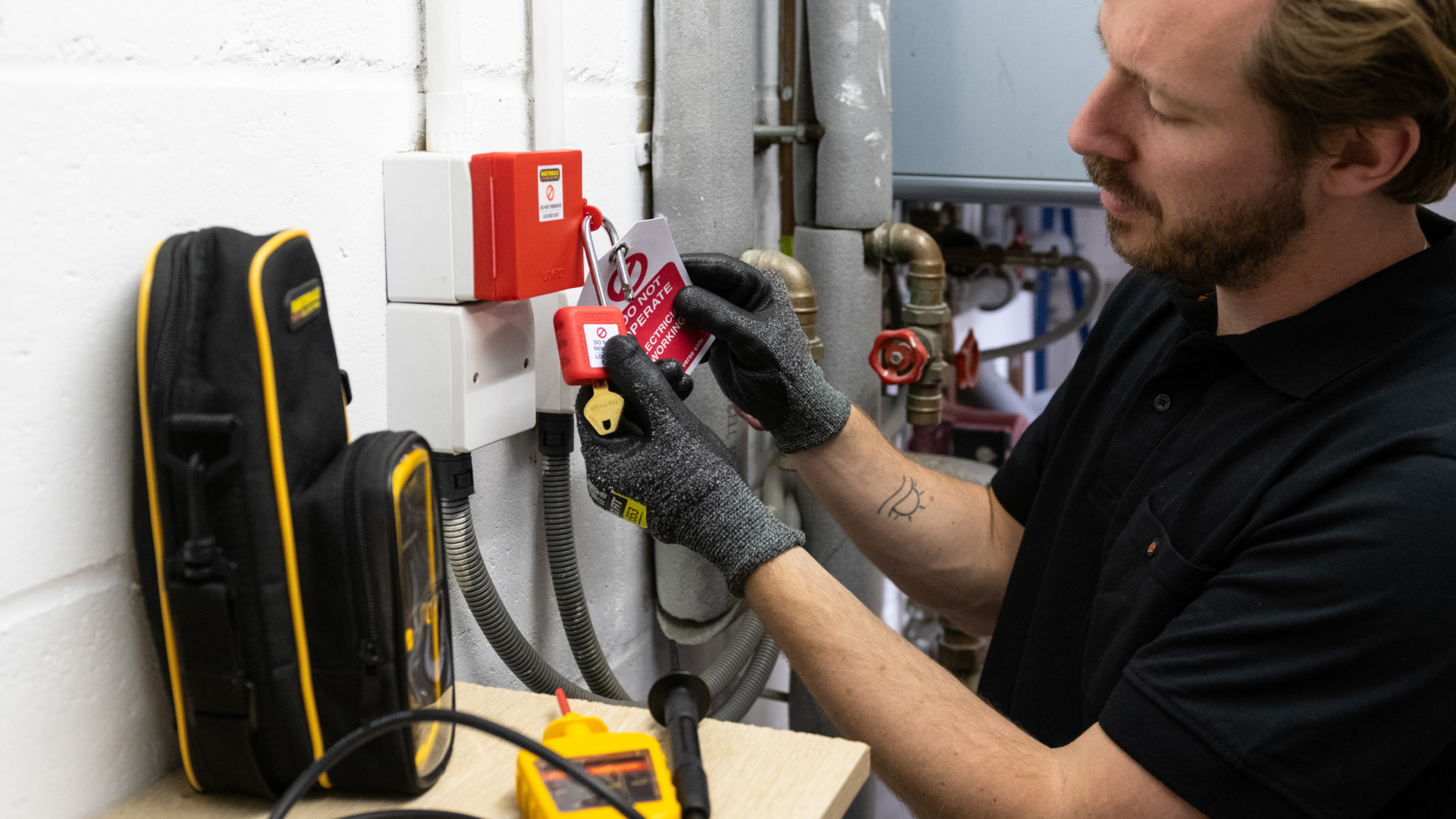

New industry research from Martindale Electric has revealed that 86% of electrical professionals surveyed have personally experienced at least one electrical incident while working.
The Electrical Safety in the Workplace Survey 2026 gathered 475 responses from electricians, electrical contractors, electrical installers, facilities and maintenance professionals, health and safety practitioners, students and apprentices across the UK electrical industry.
Martindale Electric, which has focused on helping people work safely around electricity since 1928, conducted the original research to better understand how electrical safety measures are applied in real working environments.
Near misses affect electrical workers
The research examined electrical incidents and near misses, incident reporting, safe isolation practices and experiences involving unexpectedly live metalwork.
Among respondents, 78% reported experiencing at least one near miss while working.
A further 64% said they had witnessed an electrical incident involving another electrician on the job.
Electrical incidents go unreported
The findings also highlighted potential gaps in formal incident reporting.
More than half of electrical professionals surveyed said the most recent incident or near miss they had experienced or witnessed was not formally reported.
The research provides insight into how electrical safety is managed in practice and identifies opportunities to improve safety across the industry.
Safe isolation procedures examined
While 86% of electrical professionals said they were very familiar with Safe Isolation Procedures, only 55% reported always following the procedure in full before starting work.
Where the Safe Isolation Procedure had not been followed fully, the most commonly cited reason was confidence that the circuit was dead, reported by 46% of respondents.
Time pressure was the second most common reason, cited by 25%
Steve Dunning, Managing Director, Martindale Electric, said: “These figures show that electrical incidents and near misses are still far too common on site and that too many go unreported.”