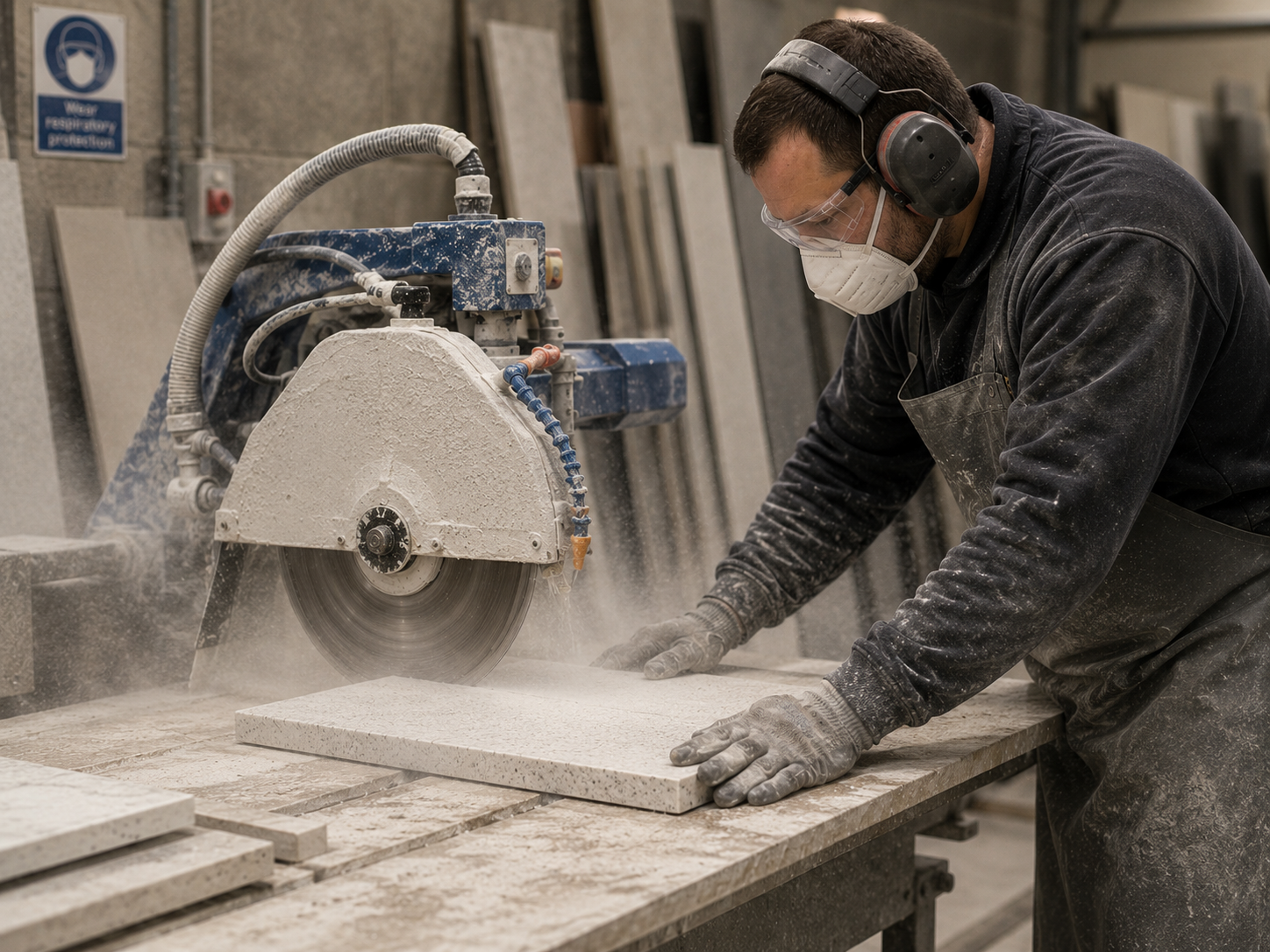

The Health and Safety Executive (HSE) has announced a major package of measures aimed at protecting workers from engineered stone dust exposure.
The risks of being exposed to such materials include silicosis, a preventable but potentially fatal lung disease caused by inhaling silica dust during stone cutting activities.
New guidance targets dry cutting practices
The measures include new guidance stating that dry cutting of engineered stone is unacceptable. HSE said businesses should instead use water suppression techniques, already adopted by many industry leaders, to meet legal safety requirements.
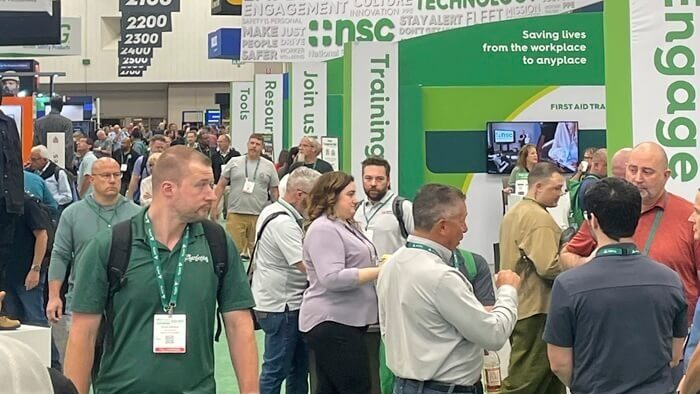
The guidance was published ahead of the Stone and Surfaces Show attended by industry professionals and tradespeople.
Nationwide inspections and enforcement planned
HSE also confirmed a nationwide inspection programme targeting engineered stone fabricators across Great Britain.
Over the next 12 months, inspectors will carry out more than 1,000 site visits, with enforcement action planned where standards are not met. Initial inspections have already started.
The announcement follows the deaths of two young workers from silicosis in recent years, prompting calls for action from MPs, trade unions and medical professionals.
HSE said its response followed a two year programme of research and industry engagement.
Research highlights increased silica exposure risks
Research conducted by HSE found dry fabrication methods can expose workers to respirable crystalline silica levels between five and ten times higher than wet cutting techniques using equivalent tools.
The research also identified lower silica engineered stone products available at comparable quality levels.
HSE has also issued its first dedicated COSHH guidance sheet for engineered stone, outlining employer responsibilities including using lower silica products, applying water suppression, controlling mist, providing respiratory protective equipment and carrying out regular health surveillance.
Mike Calcutt, Deputy Director in HSE’s Engagement and Policy Division, said: “Today’s guidance marks our most significant intervention in the engineered stone sector to date, and not without good reason.
“Silicosis is incurable, but it is entirely preventable. No worker should lose their life to a lung disease caused by their job, and that is why we have taken this action.
“We have spent the past two years conducting extensive research and industry engagement to understand the scale of this risk. What we found was stark.
“Many businesses are not putting the right controls in place, they are still using engineered stone with high silica content, and dry cutting, which must stop.
“To every employer in this sector: the guidance is now published, the expectations are clear, and our inspectors are coming. Those who are cutting corners are not just putting their workers at risk — they are undercutting the businesses doing things properly. We will create a level playing field.
“To workers handling engineered stone: know your rights and know the controls that should be keeping you safe. If you have concerns, contact HSE.”
Sir Stephen Timms, Minister for Social Security and Disability, said: “Every worker deserves to come home safe, without fear of losing their life to a preventable, deadly lung disease caused by their job.
“This new guidance gives businesses clear, unambiguous instructions on what the law requires, and this spring and summer HSE will carry out more than 1,000 inspections across the industry to make sure those standards are enforced, and the lives of workers protected.”
The new guidance has been backed by the British Occupational Hygiene Society, IOSH, and the Worktop Fabrication Federation.