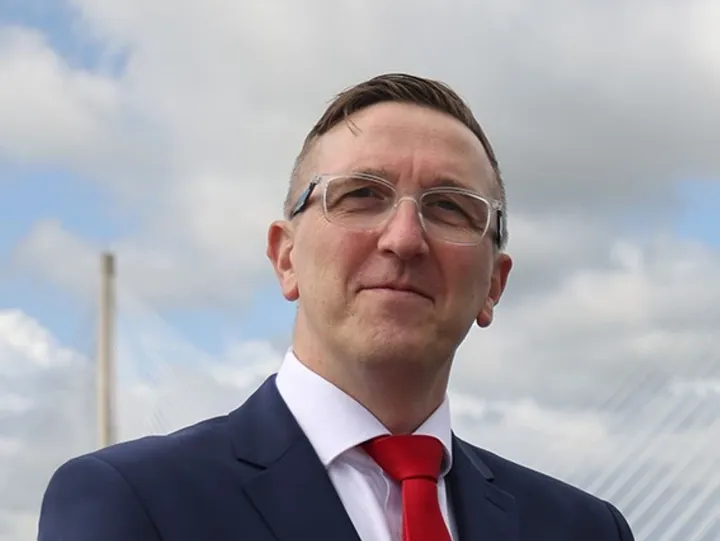
Grant Wallace, Chairman, Enhancing Excellence Ltd, and Managing Director, Salos Sunesis Ltd.
What made you want to work in the safety industry?
Honestly, I don’t think I chose safety, it chose me. I began my career working in the rope access sector and that very quickly focused my mind on what can go wrong. You realise that the difference between a good day and a catastrophic one often comes down to human decisions made under pressure. That fascinated me. Not the technical systems, but the people operating them. Once I started looking at it through a human factors lens, I could not look away.
Why did you start Enhancing Excellence?
Salos Sunesis does what it does really well within oil and gas, but I kept having conversations with people from other safety-critical sectors- healthcare, construction, transport – who were grappling with exactly the same problems. Human factors don’t respect industry boundaries. Enhancing Excellence gave us a home for that broader work. And bringing airline captain Chris Stirling on board as MD made perfect sense. Aviation has been applying human factors to safety for decades, and the results speak for themselves.
What does operational excellence mean to you?
It is not about perfection. Perfection is a ceiling you never reach. For me, operational excellence is about building organisations where people have the knowledge, the tools and above all the psychological safety to do their jobs well every single day. When the culture is right, and teams are focused on continually learning and improving, excellence follows. This has to be underpinned with operational discipline and a focus on what we would call “the brilliant basics”.
What do you think the future of safety looks like?
The traditional approach has been to focus on lagging indicators as a future predictor for safety performance. Companies are now understanding that looking out the rear windscreen does not tell them where they are going. Organisations that will succeed will be focused on integrating human performance principles and technology that allows their teams to look over the safety horizon and learn and apply lessons more rapidly. We see BrainFit as a key part of that approach where wearable technology can inform the team of diminished cognitive state that could significantly affect operations. Previously, brain health has not been an area of focus, yet it drives everything we do.
If you didn’t work in the industry, what do you think you would be doing?
I couldn’t imagine not working in the safety sector. I have always been drawn to helping people see things differently. Whether that is a safety culture shift or just explaining why the way we think affects the way we act, there is something deeply satisfying about when someone has that “lightbulb moment”.
What three words would your colleagues use to describe you and why?
Passionate, because I genuinely cannot switch it off, and I suspect that is obvious. Straight-talking, because I would rather have an honest, difficult conversation than a comfortable, pointless one. And stubborn, probably, though I would prefer persistent. When I believe something matters, I’ll keep at it.
What is your favourite way to unwind from a busy week?
Paddle boarding, without question. There is something about being on the water. It demands just enough of your attention that your brain stops grinding through work problems, and you end up completely present. I’d recommend it to anyone.