
The National Safety Council (NSC) has announced the 10 technology providers selected to take part in the 2026 Work to Zero Safety Innovation Challenge.
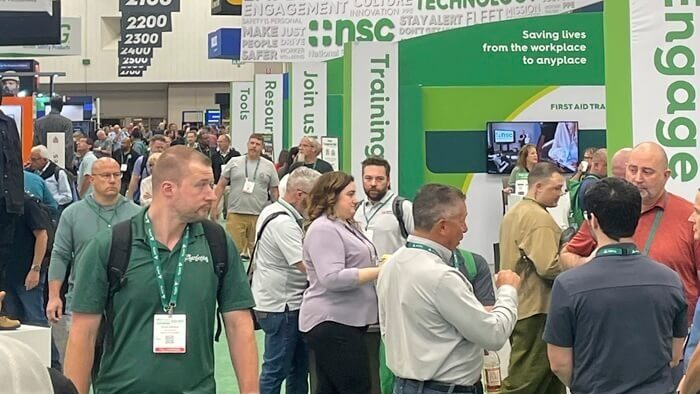
The competition will be held during the NSC Safety Congress and Expo in Indianapolis from 14 to 16 September and forms part of the Council’s Work to Zero initiative, delivered in partnership with the McElhattan Foundation.
Focus on hazardous energy
Hosted in collaboration with TechConnect, a division of Advanced Technology International, this year’s challenge focuses on hazardous energy control, addressing risks associated with chemical, electrical, hydraulic, mechanical, pneumatic and thermal energy sources.
According to the US Bureau of Labor Statistics, more than 140 workers died from electrocution in 2023, while almost 50 fatalities were linked to uncontrolled hazardous energy.
Live technology showcase
All 10 participants will demonstrate their technologies in the Safety Technology Pavilion during the NSC Safety Congress and Expo.
Three finalists will then be selected to present their solutions during a live session at the event.
Participants will also have the opportunity to join the Work to Zero Pilot Grant Programme, which supports organisations in evaluating and implementing emerging safety technologies in operational environments.
The Work to Zero initiative aims to eliminate workplace fatalities by encouraging the development and adoption of technology based safety solutions.
The 10 participants are: AlchLight LLC, BleedIO Tech, FibrX, LABEN – University of Pavia, Laurette AI, LLC, Master Lock, Namatad, NanoSieve Inc, Otterlocks, and Valkim Technologies LLC.
Dr. Matt Law, Director of Work to Zero at NSC, said: “Every worker deserves to return home safely at the end of the day.
“Through the Safety Innovation Challenge, we’re identifying emerging technologies that can help organizations better control hazardous energy, strengthen safety practices and protect workers.
“We look forward to showcasing how these innovative solutions can accelerate progress toward our goal of eliminating workplace fatalities.”