
Assistant Editor Bethanny Kellock explores the ways in which connected monitoring, gas detection and real time safety intelligence are reshaping workforce protection strategies across hazardous energy and utility environments.
Safety across the energy and utilities sector has become increasingly shaped by connected technologies, environmental monitoring and the ability to make decisions in real time. Whether on offshore platforms, within petrochemical refineries, across utility networks, or inside confined industrial spaces, employers are managing increasingly complex operational risks while attempting to maintain productivity, continuity and compliance.
The challenge is no longer limited to identifying hazards after they emerge. Modern safety strategies are now focused on anticipation, visibility and response. Connected systems, wearable technologies, gas detection networks and remote monitoring platforms are changing how organisations approach workforce protection in environments where exposure to toxic gases, fire, explosion risks and isolation remain persistent operational realities.
Across the sector, there is growing recognition that traditional standalone safety equipment is no longer sufficient in many applications. As facilities become more automated and geographically dispersed, operators are demanding systems capable of sharing data between devices, control rooms, and emergency response teams in real time. This shift is particularly evident in oil and gas, power generation, renewable infrastructure and utilities maintenance, where remote working conditions can leave employees exposed for extended periods without immediate supervision.
The growing integration of safety systems into broader industrial operations is also reshaping procurement priorities. Organisations are increasingly looking beyond single products and assessing how safety technologies interact with wider operational infrastructure, including SCADA systems, predictive maintenance platforms, digital twins and industrial IoT environments. The result is a more connected approach to workforce protection, where safety information becomes part of the operational intelligence framework rather than remaining isolated within compliance departments.
The evolving risk landscape in energy operations
Energy infrastructure remains one of the most hazardous operating environments globally. Workers routinely encounter combustible gases, toxic atmospheres, high pressure systems, confined spaces, elevated structures and volatile environmental conditions. Offshore installations, refineries, gas distribution networks and electricity transmission infrastructure all introduce unique combinations of physical and operational risk.
At the same time, the sector is experiencing substantial transformation. Decarbonisation initiatives, renewable energy expansion, ageing infrastructure, and workforce shortages are increasing operational complexity. New energy projects, including hydrogen production, battery storage and carbon capture facilities, introduce unfamiliar hazards that require updated safety procedures and monitoring technologies.
In offshore and refinery settings, hazardous gases continue to represent one of the most serious threats to workforce safety. Hydrogen sulphide, methane, volatile organic compounds, carbon monoxide and oxygen displacement remain persistent concerns in enclosed or poorly ventilated areas. While these hazards are longstanding, the methods used to monitor and respond to them are becoming increasingly sophisticated.
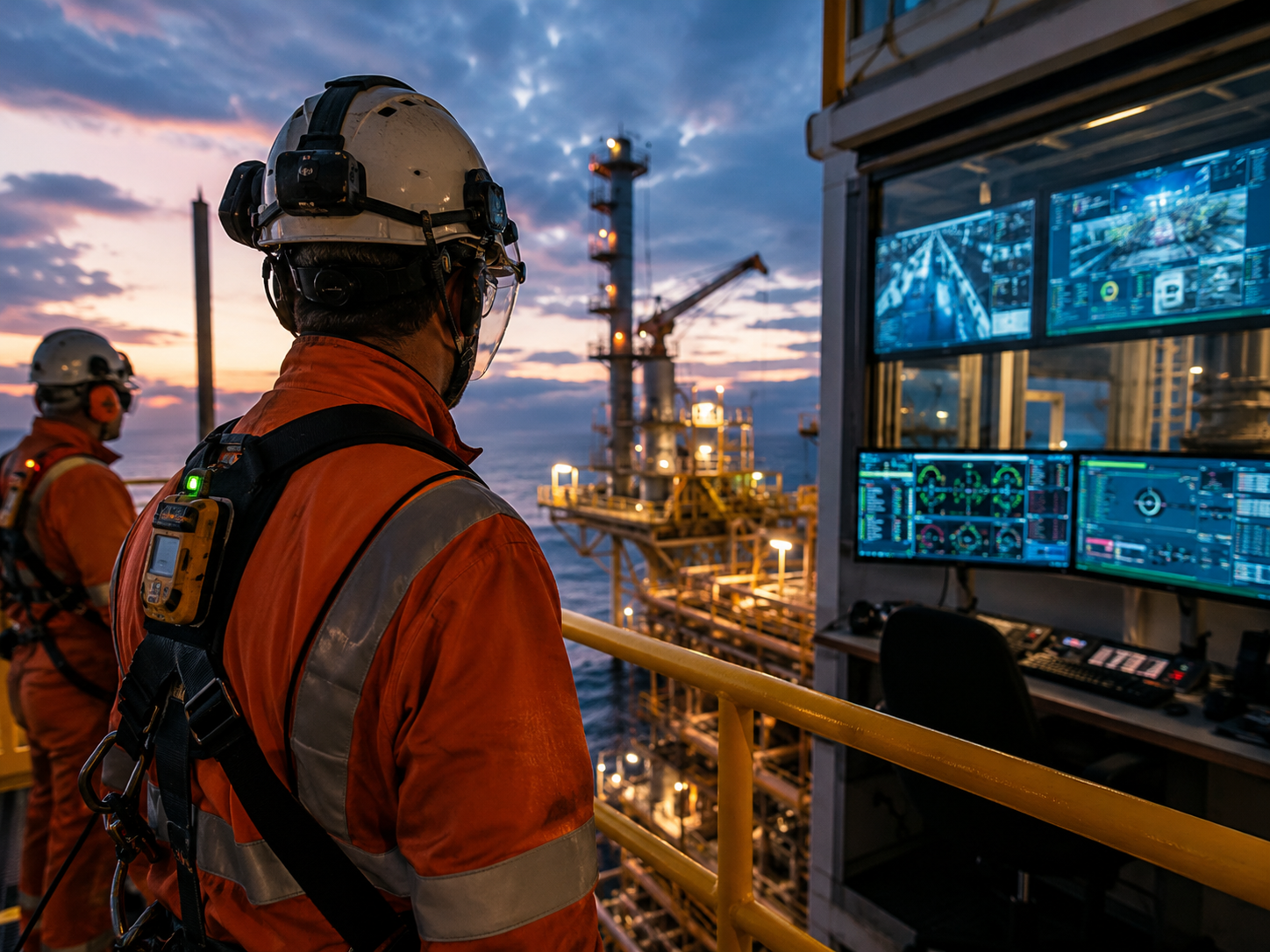
Historically, gas detection often relied on fixed point systems supplemented by portable detectors carried by workers. While this remains standard practice, connected detection technologies are now enabling continuous communication between personnel, monitoring systems and control rooms. This capability is becoming particularly important in remote or isolated environments where rapid emergency response can determine the outcome of an incident.
The integration of cloud connectivity and wireless communications into industrial safety systems is enabling organisations to improve visibility across entire sites. Control room operators can increasingly monitor worker exposure, detector status, alarm events and environmental conditions in real time, allowing faster intervention where conditions deteriorate unexpectedly.
TO READ THE FULL ARTICLE READ THE LATEST ISSUE HERE.